
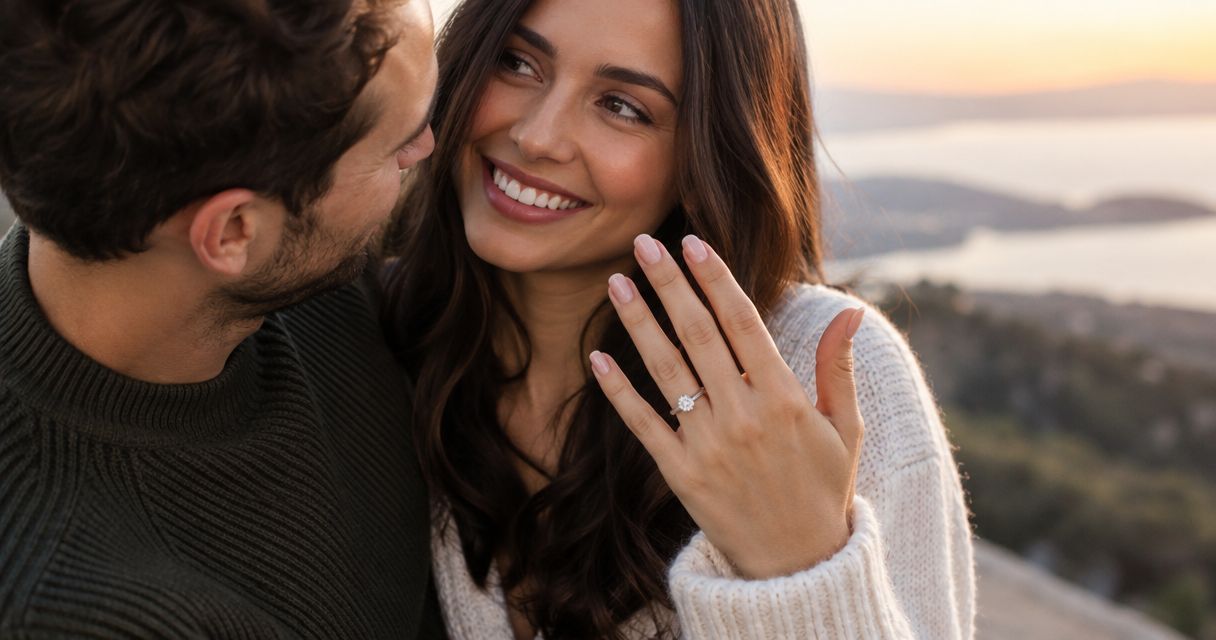
Best overall: a relaxed hand-hold. Best for ring detail: a window-lit close-up. Best for a personal story: a shared-object composition. The best engagement ring photo ideas give the ring a clear place in the frame without making your relationship feel like a jewelry display; this 2026 guide compares eight approaches you can bring to an engagement session.
TL;DR
- The best engagement ring photo ideas start with a relaxed hand-hold: visible jewelry, natural connection, minimal staging.
- Choose a window-lit close-up for ring detail and a walking portrait for movement.
- Creativewillsphoto offers engagement photography in Rochester, Minnesota, for couples planning portraits together.
- Include a wide portrait, a hand detail, and a close-up rather than repeating the same composition.
Why this matters
A ring photograph has two jobs: show the ring and say something about the people wearing it. A tight detail records the setting. A wider portrait gives that detail a home in your story.
Creativewillsphoto offers engagement photography for couples in Rochester and across Southeast Minnesota. For a 2026 engagement session, plan a small set of complementary photographs, not a long list of nearly identical hand poses. You want images that stand together, whether you share them now or frame them later.
What makes the best engagement ring photo ideas
Use these criteria to choose compositions before choosing props or locations:
- Ring visibility: The band and setting need a clear outline, not a background full of competing details.
- Comfortable hands: Relaxed fingers and a supported wrist matter more than an elaborate pose.
- Connection: Touch, proximity, or a shared activity should explain why the ring belongs in the photograph.
- Controlled light: Look for light that reveals the setting without turning its reflective surfaces into distracting bright patches.
- Meaningful surroundings: Include a location or object only when it adds something personal.
- Useful variety: Combine different distances and orientations so every photograph has a distinct purpose.
The strongest choice is the one you can hold comfortably. If a pose requires constant correction, simplify it before taking more photographs.
Engagement ring photo ideas at a glance
| Idea | Best for | Standout feature | Key limitation | |---|---|---|---| | Relaxed hand-hold | A natural default | Shows the ring through an ordinary gesture | Overlapping fingers can hide the setting | | Window-lit close-up | Jewelry detail | Keeps attention on the ring and hand | Says little about the couple by itself | | Gentle embrace | Intimate portraits | Connects the ring to both partners | Clothing and hands can compete | | Walking hand-in-hand | Movement | Gives the gesture a purpose | Ring detail is harder to keep clear | | Shared-object composition | Personal storytelling | Adds a meaningful part of your life | Props can become the subject | | Backlit silhouette | Graphic variety | Emphasizes shape and connection | Does not preserve fine ring detail | | Ring-box detail | Announcement layouts | Creates a separate detail photograph | Can feel detached from the relationship | | Environmental portrait | A meaningful setting | Places the engagement within a larger scene | The ring occupies little of the frame |
1. Relaxed hand-hold: best for a natural starting point
A relaxed hand-hold puts the ring where it belongs: on your hand, connected to your partner. Let the ring-bearing hand rest over or alongside the other hand, with the setting facing the camera rather than pressed between fingers.
Keep the grip light. A small adjustment to the wrist is usually a better starting point than spreading every finger into a deliberate display.
Relaxed hand-hold pros:
- Gives both partners a role.
- Works without a separate prop.
- Fits naturally between wider couple portraits.
Relaxed hand-hold cons:
- Interlaced fingers can conceal the ring.
- A tight grip makes the gesture look tense.
Best for: Couples who want a recognizable, understated engagement photograph.
Verdict: Choose the relaxed hand-hold first. It establishes a useful baseline before you try more styled ideas.
2. Window-lit close-up: best for showing the ring setting
Place the ring-bearing hand near a window and turn it until the setting has a readable outline. Support the hand on your partner's hand, a plain surface, or your own forearm rather than holding it rigidly in the air.
Watch the reflections as the hand turns. You want the ring's shape and detail, not simply the brightest possible sparkle. For a 2026 announcement, this is the detail image to pair with a portrait showing both faces.
Window-lit close-up pros:
- Directs attention toward the setting.
- Keeps the composition simple.
- Offers an indoor alternative to an outdoor detail.
Window-lit close-up cons:
- Strong reflections can obscure the ring.
- A close crop removes much of the relationship context.
Best for: Couples who want a dedicated photograph of the ring's design.
Verdict: Choose the window-lit close-up as a companion image, not the whole story.
3. Gentle embrace: best for an intimate couple portrait
Rest the ring-bearing hand on your partner's shoulder, chest, or upper arm during an embrace. Choose the position that feels comfortable first, then turn slightly so the camera can see the ring.
A quiet background and uncomplicated fabric help the hand remain visible. Keep the touch soft; gripping a lapel or bunching a sleeve changes the feeling of the photograph.
Gentle embrace pros:
- Shows the ring alongside the relationship.
- Accommodates a close portrait of both faces.
- Gives the hand a supported resting place.
Gentle embrace cons:
- Patterned clothing can distract from the ring.
- An awkward wrist angle makes the pose feel arranged.
Best for: Couples who feel comfortable being photographed close together.
Verdict: Choose the gentle embrace when connection matters more than jewelry detail.
4. Walking hand-in-hand: best for movement
Walk together with an easy grip and let your arms move naturally. This composition treats the ring as part of a shared moment rather than asking you to present it directly to the camera.
Separate the goals: make the moving portrait first, then pause for a clearer hand detail. Trying to show faces, movement, scenery, and a small setting equally well in one frame creates competing priorities.
Walking hand-in-hand pros:
- Gives you an action instead of a fixed pose.
- Adds movement to a portrait collection.
- Includes clothing and surroundings naturally.
Walking hand-in-hand cons:
- Moving hands make precise ring detail harder.
- The setting can turn away from the camera.
Best for: Couples who prefer doing something to holding still.
Verdict: Choose walking portraits for atmosphere; pause for the ring close-up.
5. Shared-object composition: best for a personal story
Rest your hands around an object that genuinely belongs in your relationship: a favorite book, a handwritten note, or a familiar mug. Use something meaningful enough that you would recognize its significance without an explanation.
Keep the object secondary. The ring-bearing hand needs a clear position, and visible lettering should not compete with the gesture. Borrowing a trend is less useful than photographing something you actually share.
Shared-object composition pros:
- Adds personal context.
- Gives your hands a practical task.
- Creates a different composition from standard portraits.
Shared-object composition cons:
- A large object can conceal the ring.
- Unrelated props make the image feel staged.
Best for: Couples with a shared ritual, interest, or keepsake.
Verdict: Choose a shared object only when its meaning is real. Otherwise, leave it out.
6. Backlit silhouette: best for graphic variety
Place the joined hands against a brighter background and compose around their outline. Leave enough separation between fingers for the gesture to remain readable rather than becoming a single dark shape.
A silhouette emphasizes form, not the stone's facets or the band's finish. Treat it as an expressive addition to your 2026 engagement photographs, after you have a clear view of the ring.
Backlit silhouette pros:
- Adds a distinctly different visual treatment.
- Focuses attention on the gesture.
- Reduces distracting surface detail.
Backlit silhouette cons:
- Loses fine jewelry detail.
- Overlapping hands can create a confusing outline.
Best for: Couples who want a graphic image alongside conventional portraits.
Verdict: Choose a silhouette for variety, not as your only ring photograph.
7. Ring-box detail: best for an announcement detail
Photograph the ring in its box on a stable, uncluttered surface. Keep the box open at an angle that reveals the setting, and remove surrounding objects that do not contribute to the composition.
This is an object photograph rather than a couple portrait. Use it as a supporting image, especially if the box itself has personal significance. Keep loose jewelry away from edges, drains, and moving water.
Ring-box detail pros:
- Separates the ring from busy clothing or scenery.
- Gives an announcement a dedicated detail image.
- Avoids the need for a hand pose.
Ring-box detail cons:
- Does not show either partner.
- The box can dominate a small ring setting.
Best for: Couples who want an object-focused photograph within a larger collection.
Verdict: Choose the ring-box detail as an extra; skip unnecessary handling outdoors.
8. Environmental portrait: best for a meaningful location
Stand or sit together in a setting that matters to you, with the ring-bearing hand resting visibly against your partner or your clothing. Let the location remain recognizable instead of cropping immediately into the hands.
The ring will be small in this composition. That is the trade-off: the photograph records where you are together, while a separate close-up records what the ring looks like.
Environmental portrait pros:
- Includes a meaningful setting.
- Shows both partners within the scene.
- Balances tightly cropped detail photographs.
Environmental portrait cons:
- Cannot give the ring equal visual prominence.
- Busy surroundings can draw attention away from you.
Best for: Couples whose engagement story includes a particular place.
Verdict: Choose an environmental portrait for context, then move closer for detail.
How these ideas are ranked
The relaxed hand-hold ranks first because it combines ring visibility, connection, and a straightforward gesture. Detail-led compositions follow, while silhouettes and object photographs serve narrower purposes.
This is a planning guide, not a scored equipment test. Creativewillsphoto engagement photography serves couples; choose the composition that fits your comfort and intended photographs rather than treating the order as a compulsory shot list.
Build a short sequence, not a complicated shot list
For your 2026 session, plan 3 complementary frames before adding variations:
- Wide portrait: Establish both partners and the setting.
- Hand detail: Show the ring through touch or an embrace.
- Close-up: Give the setting its own clear photograph.
That sequence gives each image a job. Start with 1 ring-focused gesture involving 2 hands, then change the framing rather than inventing a new pose for every photograph.
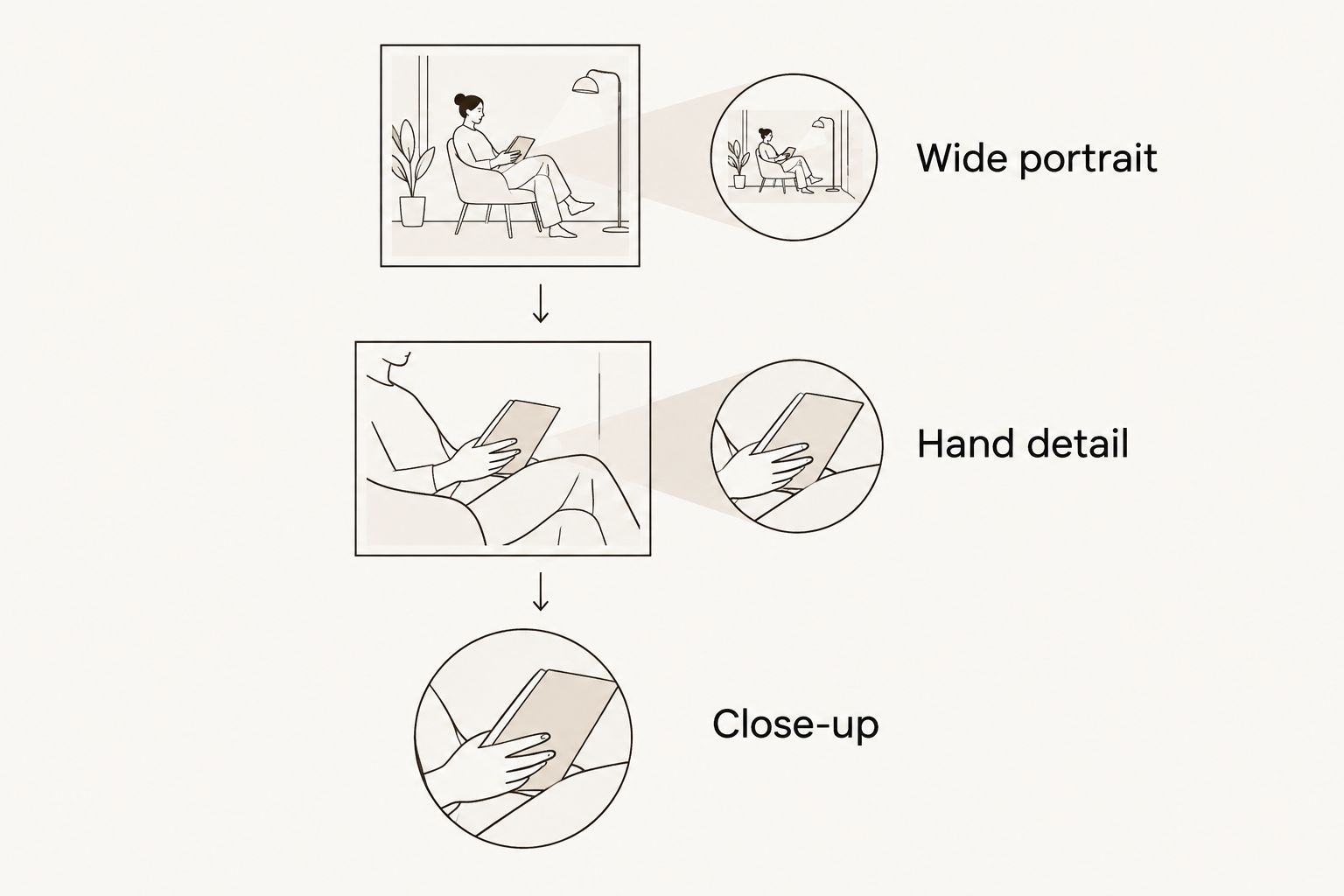
Change the framing before adding another pose.
Before moving locations, check whether you have both a recognizable couple portrait and a readable ring detail. More photographs of the same crop do not replace either one.
Which engagement ring photo idea should you choose?
Choose the relaxed hand-hold if you are undecided. Add a window-lit close-up when the setting deserves its own image, and an environmental portrait when the location carries meaning.
Creativewillsphoto engagement photography is for couples in Rochester and Southeast Minnesota who want portraits together. Bring a short list of preferred compositions to the conversation, with room for gestures that feel natural on the day.
For a 2026 engagement collection, aim for connection first, clear detail second, and decorative extras last. A ring photograph should still feel like yours after the announcement has passed.
FAQ
What's the best engagement ring photo idea for a natural look?
A relaxed hand-hold is the best starting point for a natural engagement ring photograph. Rest the ring-bearing hand lightly against your partner's hand and turn the setting toward the camera without spreading your fingers deliberately.
How do I show my engagement ring without an awkward hand pose?
Give your hand a comfortable resting place. Your partner's shoulder, forearm, or hand supports the gesture, so you can adjust the ring's angle without holding your wrist rigidly.
Is window light better than direct sunlight for ring photos?
Start with window light when you want a controlled indoor close-up. Direct sunlight creates a different look, but its reflections require careful positioning to keep the ring's detail readable.
Should both partners be in an engagement ring photo?
Include both partners in at least part of your ring-photo collection. A separate close-up can document the jewelry, while a hand-hold or embrace connects it to your relationship.
What should I wear for engagement ring photographs?
Choose clothing that lets your hands remain visible and comfortable. Check sleeves, cuffs, and patterns near the ring-bearing hand, since those details share the close-up frame.
Can I take engagement ring photos indoors during a Minnesota winter?
Yes, an indoor setting works for engagement ring photographs. Look for usable window light, an uncluttered background, and a comfortable place to rest your hand.
Do I need props for engagement ring photos?
No, a hand-hold or embrace needs no separate prop. Include an object only when it adds personal meaning without hiding the ring or distracting from your connection.
One last thing
Plan where the photograph will live before deciding how tightly to crop it. A close-up that fills a phone screen and a portrait intended for a frame ask different things of the composition.
Request one version with breathing room around your hands. That simple choice preserves room for a later crop without making the ring the only part of the story.